Most founders pick SaaS marketing agencies the same way they’d pick a hotel. They check the rating, scroll through the reviews, and count the logos. None of that tells you whether the agency has ever had to think about trial-to-paid conversion. Or why desktop users pay, and mobile users churn.
A PLG SaaS product sells through the product itself. Users sign up, try it, and either upgrade or leave. A sales-led enterprise tool sells through a team. Someone fills out a form, gets a demo, and closes 90 days later. Those two growth models need completely different marketing.
This article breaks agencies down by type first, then by name. Most lists skip straight to the names. That’s why founders end up with an ABM agency running their self-serve product, or a content agency burning runway while they wait 12 months for organic traffic to kick in.
By the end, you’ll know exactly which type fits your product and which agencies in that category are worth talking to.
Most founders pick the wrong type of agency
Most founders compare agencies on the wrong things. Pricing pages. Case study logos. How polished the proposal looks. Then they sign, spend three months watching generic campaigns run, and wonder why CAC keeps climbing.
The real problem isn’t the agency. It’s the type. A PLG SaaS product lives or dies on trial quality and activation. A sales-led tool lives or dies on pipeline. Those two products need completely different thinking.
Most agency lists skip this distinction entirely. You end up comparing agencies that have nothing in common except calling themselves SaaS specialists.
This article covers the five types of SaaS agencies, who each one is built for, and the best option in each category.

What a SaaS marketing agency actually does
Not every agency that works with SaaS companies is a SaaS specialist. A generalist celebrates clicks and signups.
A specialist asks what happens after the signup: are users activating, hitting the feature that makes them pay, and converting within a payback window that works?
Subscription businesses have a specific math problem. You spend today to acquire a user who pays back over 12 to 24 months. If CAC runs too high relative to LTV, the channel bleeds cash regardless of volume. A real specialist builds campaigns around that math.
In practice, that means:
- Running PPC for SaaS against keywords where buyers are ready to pay, not just browse
- Tracking credit card adds and paid conversions, not just signups
- Knowing which products are worth advertising and which ones attract users who churn
The 5 types of SaaS marketing agencies
The wrong type of agency costs more than the retainer. It costs the months you spent waiting for results that were never coming. Before you look at any name on a list, you need to know which category fits your product.
1. Paid search and PPC agencies
These agencies run Google Ads, Microsoft Ads, LinkedIn, and Meta for SaaS products. The focus is on trial volume and CPA. If your product has search demand and users can sign up and activate without a sales call, paid search is usually the fastest channel to test. Expect a 2-3 month window before you have enough data to read the signal clearly. The metrics that matter are signups, credit card adds, and paid conversions. Not clicks.
2. SEO and content agencies
These agencies build organic traffic through search-optimized content and link building. The tradeoff is time. Meaningful traffic typically takes 6-12 months to show up. That’s not a knock on the channel. It’s just the reality of compounding growth. SEO works best as a parallel channel once paid is already running, or for early-stage products that can’t yet sustain a paid budget.
3. Full-service agencies
These agencies cover multiple channels under one roof. Paid, SEO, social, email, sometimes more. The upside is consolidation. The tradeoff is depth. A full-service agency will rarely go as deep on any single channel as a specialist. They suit companies that need one vendor across the board and are willing to accept that over pure channel expertise.
4. ABM agencies
Account-based marketing agencies target a defined list of companies, not a broad audience. That makes them a natural fit for sales-led SaaS products with 60-90 day sales cycles and a clear list of target accounts. For PLG SaaS, where the goal is self-serve trial volume at scale, ABM is usually the wrong primary model.
5. CRO agencies
Conversion rate optimization agencies improve what happens after traffic lands on your site. That’s valuable work, but it’s not a standalone growth channel. CRO runs best alongside paid or SEO, where there’s enough volume to test and enough data to act on.
The best SaaS marketing agencies by type
The SaaS marketing agencies below are organized by category. Each entry covers what they specialize in and who they’re for. Use the framework from the previous section to find your category first, then look at the names inside it.
Best SaaS PPC and paid search agencies
Camel Digital
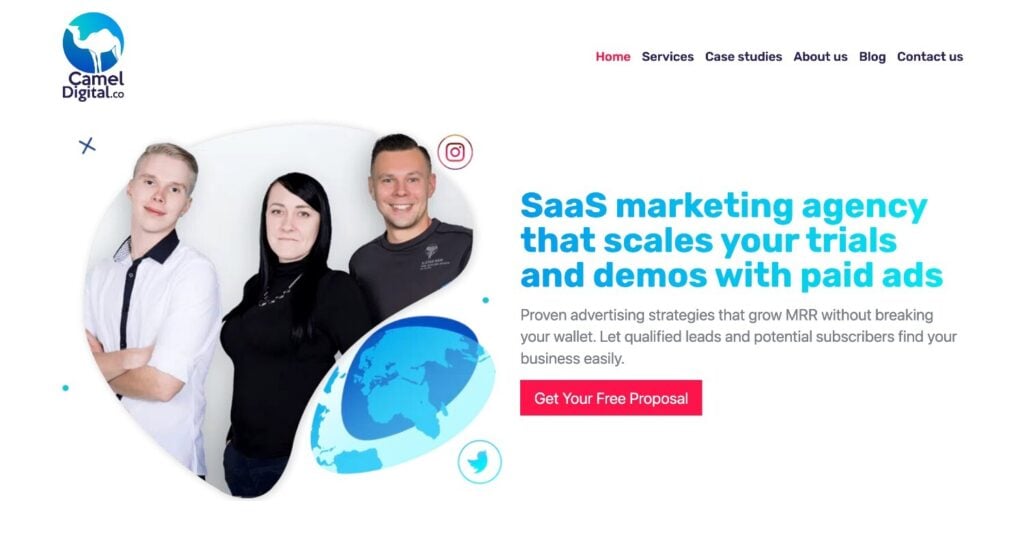
Camel Digital is a SaaS PPC agency built specifically for PLG SaaS companies. They run LinkedIn, Meta, and Google Ads for SaaS for trial-based and self-serve products, and they measure trial-to-paid conversion, not just signup volume.
The key difference is product selection. Most agencies run ads on whatever the client asks. Camel Digital decides what’s worth advertising based on LTV and activation data. That means identifying which use cases attract high-LTV buyers and cutting the ones that don’t, before a dollar gets spent.
Results across the portfolio: Resume.io hit 327 paid subscribers a month from Google Ads, with a 165% ROAS increase. Hopper HQ got 647 new credit card trials in 3 months at 233% ROAS. Tisane AI generated a $230K ACV opportunity with a 310% increase in signups quarter on quarter.
Founder Pavels Mordvicevs is involved on every account. No handoff to juniors.
What actually makes Camel Digital different:
- No long-term contracts. Month-to-month with 30 days notice.
- You own everything. All accounts, all data, all learnings handed over.
- Bi-weekly calls. No weekly check-ins, no hand-holding required.
- Camel Digital will tell you in 30 days if the math doesn’t work. No upselling through bad results.
- Desktop-first thinking built in. Mobile traffic excluded by default for PLG products.
Best for: PLG or self-serve SaaS with a desktop-first product, proven market fit, and at least $5,000/month in ad budget.
Not a fit for: Early-stage products without PMF, sales-led SaaS, or founders who need results in under 60 days.
Clutch rating: 4.9/5 (11 reviews)
Directive
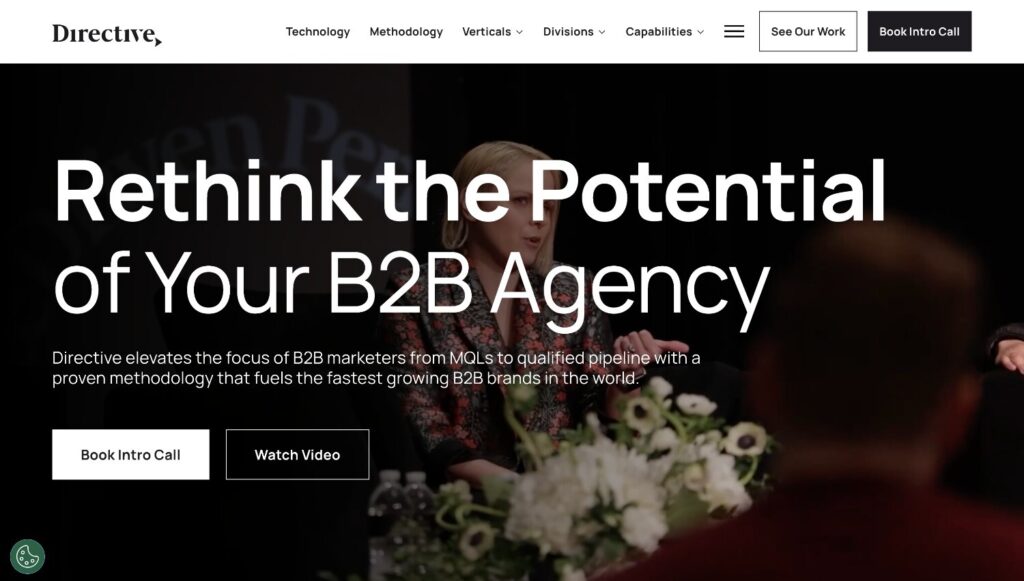
Directive is a B2B performance marketing agency built for technology companies, running paid media, SEO, RevOps, and creative with their Customer Generation methodology. The focus is on the pipeline, not MQL volume. Every channel is measured against revenue impact.
The fit is sales-led B2B tech. Defined ICP, complex buying process, and a sales team that needs marketing to prove its role in closed revenue. For PLG SaaS, where the goal is self-serve trial volume and fast CAC payback, the model isn’t the right match.
Corti’s director of marketing noted that Directive tracked CAC:LTV ratios and built revenue dashboards that made outcomes visible to leadership, not just the marketing team.
Best for: B2B technology companies with sales-led growth, a defined sales process, and a need to connect paid spend to pipeline.
Not a fit for: PLG SaaS, self-serve products, or teams looking to scale trial volume quickly.
Clutch rating: 4.8/5 (56 reviews)
Best SaaS SEO and content agencies
Skale
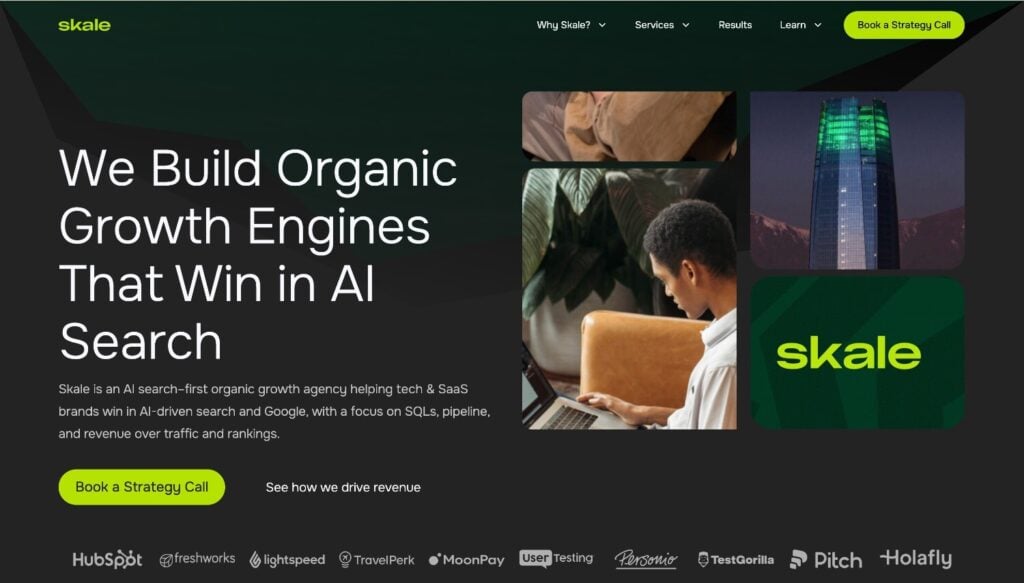
Skale is an SEO and organic growth agency focused on SaaS and tech brands, measuring success against qualified signups and new MRR rather than rankings and traffic volume. The model is built around link building, content, and topical authority, with monthly reporting tied to business impact.
The fit is SaaS companies that need organic traffic to compound over time, either as a primary channel or alongside paid. Skale is worth looking at if you have enough runway to let SEO mature and want an agency that reports on signups and pipeline, not just domain rating.
On results, they helped Typeform grow from zero to 30,000+ new monthly product signups from non-branded SEO. A business travel platform on Clutch reported 500+ high-quality backlinks built and a domain rating increase from 67 to 77 over the engagement.
Best for: SaaS companies investing in organic growth as a long-term channel, with at least 6 months of runway to let the work compound.
Not a fit for: Teams that need a fast CAC signal or are running PLG products with no time to wait on SEO.
Clutch rating: 4.9/5 (16 reviews)
Grow and Convert
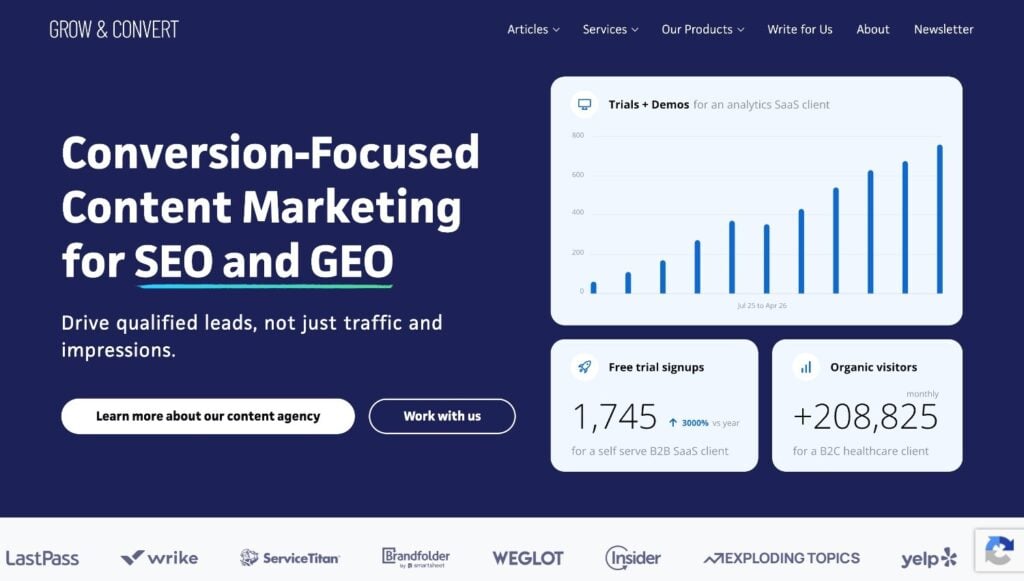
Grow and Convert is a content marketing and SEO agency that holds itself accountable to conversions, not just traffic. The model centers on bottom-of-funnel content targeting high buying intent keywords, with results measured against signups and paid conversions.
The fit is B2B SaaS companies that want organic search to drive actual revenue, not just page views. If you need a content agency that reports on paid conversions and signup volume rather than ranking movement, Grow and Convert is worth a look.
The results back it up. For Vocal Video, their content contributed 13% of total signup volume and converted to paid accounts at a higher rate than paid search. The campaign produced page one rankings for 49 keywords, 24 of them in the top three positions.
Best for: B2B SaaS teams that want SEO tied to signups and revenue, with enough runway for organic content to build.
Not a fit for: Teams that need a fast acquisition signal or are looking to scale trial volume through paid channels.
Clutch rating: 4.8/5 (9 reviews)
Best full-service SaaS marketing agencies
Kalungi
Kalungi is a full-service B2B SaaS marketing agency covering paid media, SEO, content, ABM, RevOps, branding, and web development under one roof. The model suits early-stage SaaS teams that need a full marketing function built out, rather than a specialist to go deep on a single channel.
The fit is for B2B SaaS companies at the early to mid-stage that don’t yet have a marketing leader in-house. Kalungi works best when the need is breadth, building the entire go-to-market engine rather than scaling one channel that’s already working.
For Avid, a nonprofit fundraising platform, they partnered from pre-launch through Series Seed. ARR grew from under $300K to over $3M, with more than $3M in marketing-sourced pipeline generated over the engagement.
Best for: Early-stage B2B SaaS teams that need a full marketing function, not a channel specialist.
Not a fit for: Companies with an established marketing team looking to go deep on paid or organic growth.
Clutch rating: Unavailable
NoGood
NoGood is a growth agency covering paid media, SEO, content, creative, and emerging channels like AI search optimization. The model blends channel execution with data science, and the work spans SaaS, consumer, and enterprise brands across multiple industries.
Like Kalungi, the breadth is the point. NoGood suits teams that need growth across several channels at once and want one agency handling the coordination. Companies with a marketing leader who needs depth on a single channel will get more from a specialist.
For SteelSeries, they built out an answer engine optimization strategy before most competitors knew the channel existed. AI search traffic grew 23x year on year, conversions from AI platforms grew 27x, and Perplexity visibility improved 75% over the engagement.
Best for: Growth-stage brands that need a multi-channel agency and don’t have a dedicated channel specialist in-house.
Not a fit for: SaaS teams looking to go deep on paid search or organic growth as a primary acquisition channel.
Clutch rating: 5/5 (1 review)
Best SaaS CRO agencies
Conversion Advocates
Conversion Advocates is a CRO agency that uses research, data, and experimentation to improve what happens after traffic lands on your site. The work covers user behavior analysis, A/B testing, and landing page optimization, all tied to measurable revenue outcomes.
The fit is companies that already have traffic flowing from paid or organic channels and need to improve what that traffic does. CRO is not a standalone growth channel. It runs best alongside paid search or SEO, where there’s enough volume to run tests and enough data to draw conclusions from.
For Airswift, a global recruitment platform with strong traffic but low conversion rates, ConversionAdvocates generated over $500,000 in pipeline through paid ads and site optimization over six months.
Best for: SaaS and B2B companies with existing traffic that needs to convert better, used alongside a primary acquisition channel.
Not a fit for: Teams that need to build traffic first, or anyone looking for a standalone growth channel.
Clutch rating: 4.8/5 (34 reviews)
How to know which type you need
Before you look at a single agency name, answer three questions. They’ll narrow the field faster than any review site.
What’s your growth model? PLG SaaS products sell through the product. Users sign up, activate, and either convert or leave. Sales-led products sell through a team. Someone fills out a form, books a demo, and closes weeks later. These models need different channels and different measurements. Getting this wrong is the most common reason agency relationships fail.
Where does the biggest gap sit? If you have product-market fit but not enough people finding you, the gap is traffic. If people are finding you but not converting, the gap is on the page or in the trial flow. If users activate but don’t stick, that’s a retention problem no agency can fix for you. Be honest about which gap is actually the biggest before you start shopping.
What’s your CAC payback target? If you need payback within 10 months, you need a channel that produces a signal quickly. Paid search can usually show an early CAC signal within 60 to 90 days. SEO and ABM can show leading signals, but payback takes longer, especially when the sales cycle is long.
Put those answers together, and the decision mostly makes itself. PLG SaaS with search demand and a working product: start with paid search. Early-stage with no traffic and no budget for ads: build content first and let it compound. Sales-led SaaS with a defined list of target accounts: ABM is the right conversation.

What to ask before hiring a SaaS marketing agency
Most discovery calls go in the wrong direction. The agency presents, you listen, and you walk away impressed by the pitch but with no real sense of whether they can do the job. When talking to SaaS marketing firms, these are the questions that shift the conversation from pitch to due diligence.
1. Do you measure signups or paid users? Any agency can track signups. The ones who understand SaaS unit economics track what happens after. Credit card adds, plan purchases, and trial-to-paid rate. If the answer is signups, keep pushing.
2. How do you handle CAC when CPCs go up? This is where generalists and specialists separate. A real answer involves keyword strategy, landing page conversion rate, and product selection. A vague answer involves “monitoring and adjusting.”
3. Can you show a case study from a product at my price point? A $9/month tool and a $300/month tool have completely different unit economics. If they can’t show relevant proof, that’s useful information.
4. Who actually runs my account day to day? You want a name and a seniority level. The senior person who sold you the engagement and the person managing your campaigns are often different people. Know which one you’re getting.
5. How long before I see a real signal? The honest answer for paid search is 60-90 days. For SEO, 6 months minimum. Anyone promising results inside 30 days is either defining “results” loosely or telling you what you want to hear.
6. Do you understand the difference between PLG and sales-led SaaS? If they pause on this one, you have your answer.
Ready to stop guessing which agency fits your SaaS?
The agencies on this list are all good at what they do. The question is whether what they do matches what your product needs. PLG SaaS with search demand: start with paid search. Early-stage with no traffic: build content first. Sales-led with a defined account list: look at ABM.
If you run a PLG or self-serve SaaS product and want a second opinion on your paid channels, a free audit is the next step.
Get a free 30-minute call. Pricing upfront, no pitch, no pressure. You leave with a clear picture of where your paid channels stand.
FAQs
What is a SaaS marketing agency?
A SaaS marketing agency is a specialist that runs marketing for subscription software products. Unlike a generalist, a SaaS marketing firm understands subscription economics, trial conversion, and CAC payback. The difference shows up in how they measure success: revenue and paid users, not clicks and traffic.
What are the best SaaS marketing agencies?
The best marketing agencies for SaaS depend on your growth model. For PLG and paid search, Camel Digital. For SEO and organic growth, Skale or Grow and Convert. For full-service, Kalungi or NoGood. For CRO, Conversion Advocates. For B2B sales-led SaaS, Directive.
How much does a SaaS marketing agency cost?
Retainers typically start around $3,500 to $5,000 per month for a specialist agency. Full-service agencies often run higher. Most agencies also require a separate ad spend budget on top of the management fee. Total monthly investment for paid search usually starts around $8,000 to $10,000 when you factor both in.
How long does it take to see results from a SaaS marketing agency?
For paid search, expect 60 to 90 days before you have enough data to read the signal clearly. For SEO, meaningful traffic takes 6 months minimum. Anyone promising results inside 30 days is either working with very loose definitions or setting you up for disappointment.
What should I look for in a SaaS marketing agency?
Look for agencies that measure trial-to-paid conversion, not just signup volume. Ask who runs your account day to day. Ask for a case study from a product at a similar price point. The most important signal is whether they understand your unit economics before they start talking about channels.
How is a PLG SaaS agency different from a regular SaaS agency?
A PLG-focused agency builds campaigns around how the product actually acquires users. That means measuring activation and credit card adds, not just signups. It also means knowing which products in your lineup are worth advertising based on LTV data, and which ones attract users who churn without paying.
What’s the difference between a SaaS marketing agency and a SaaS PPC agency?
A SaaS marketing agency can cover multiple channels, including SEO, content, paid media, and CRO. A SaaS PPC agency specializes in paid search and paid social. If your biggest gap is trial volume from paid channels and you have product-market fit, a PPC specialist will typically go deeper and move faster than a full-service agency.
Do SaaS marketing agencies work for early-stage startups?
It depends on where you are. If you have product-market fit, a working product, and a budget of at least $5,000 per month for ad spend, paid search is worth testing. If you’re still finding PMF or have a very small budget, content and SEO may be a better starting point. Most specialist agencies will tell you honestly if the timing isn’t right.